
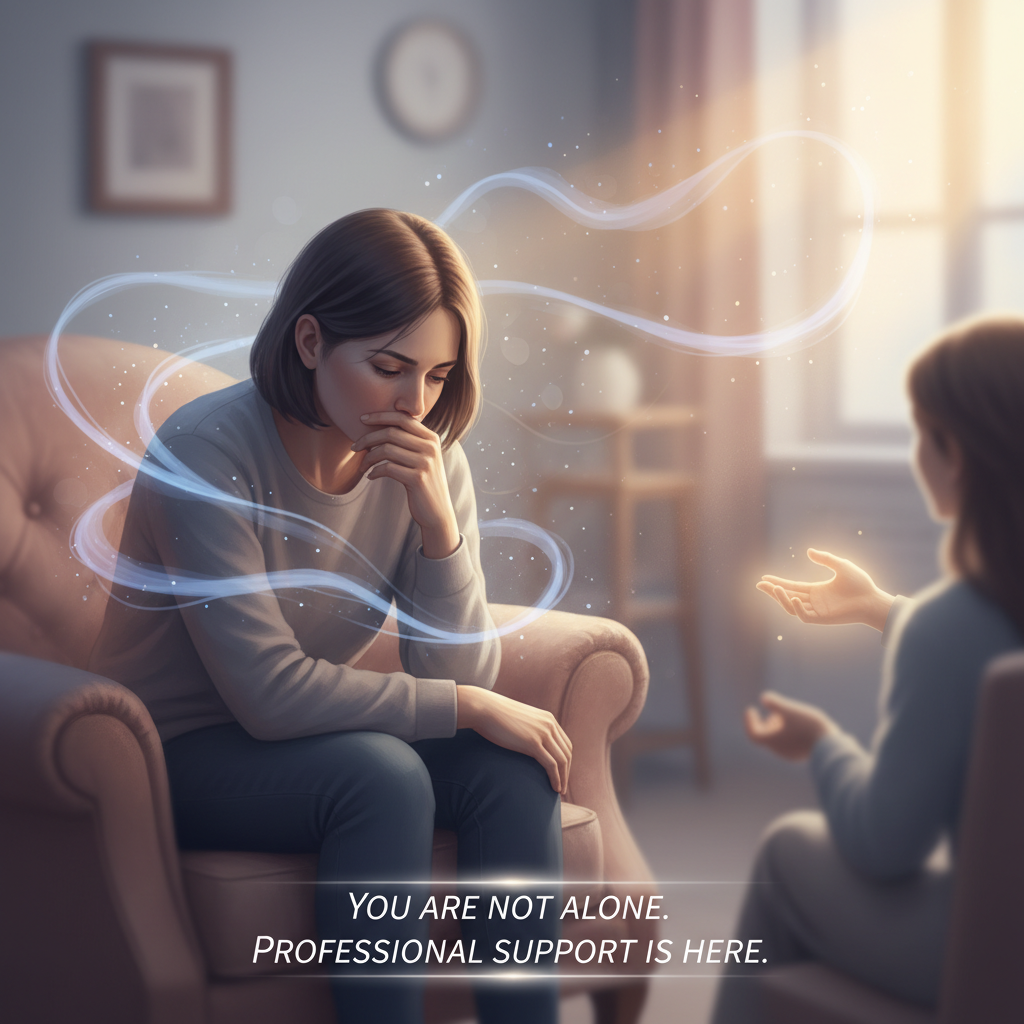
Emotional distress explained: what it is and why it matters
Emotional distress is your mind and body’s way of saying that something is not okay. It is more than having a tough day or feeling stressed out once in a while. Emotional distress involves intense emotional pain that starts to interfere with your daily life and sense of wellbeing, such as feeling very sad, helpless, anxious, or irritable, often along with physical symptoms like headaches or trouble sleeping [1].
You might notice that you are less able to cope, less like yourself, or that everyday tasks feel overwhelming. Understanding emotional distress clearly can help you decide when self care is enough, and when it is time to seek professional support. If you are already wondering about this, you may also find it helpful to read more about recognizing emotional struggles and mental health warning signs.
In this guide, you will learn what emotional distress is, how it differs from normal stress, common signs and causes, and practical steps you can take, including when to reach out for professional help.
What emotional distress actually is
Emotional distress is often described as a state of mental anguish. It can involve many of the same symptoms you see in anxiety and depression, such as ongoing sadness, worry, or trouble concentrating, and it often shows up as a reaction to specific events or ongoing pressures in your life [2].
You may experience emotional distress:
- After a major life event, such as a breakup, divorce, or the death of someone close
- During periods of chronic stress, like ongoing financial strain or caregiving responsibilities
- In response to trauma, like an accident, abuse, or a frightening event
- Alongside health issues, such as chronic illness or ongoing pain [1]
Legally, emotional distress is defined as mental suffering that comes from a particular event or pattern of events, such as harassment, threats, or other harmful behavior. In law, it can even be the basis for claims like intentional or negligent infliction of emotional distress [3]. You do not have to be involved in any legal situation for emotional distress to be real or serious, but this legal definition highlights that it is a meaningful form of harm, not something you should simply ignore.
How emotional distress differs from normal stress
Everyone feels stressed at times. A busy day, a conflict at work, or an upcoming deadline can leave you feeling tense or on edge. Typically, this sort of stress fades when the situation resolves or you have time to rest and reset.
Emotional distress is different. Distress is a more intense form of emotional suffering that significantly affects how you function in your daily life, from your work to your relationships and your ability to care for yourself [1].
You might be experiencing emotional distress rather than everyday stress if you notice that:
- The feelings are strong and persistent, not just tied to a single moment
- Your sleep, appetite, or energy are clearly affected
- You cannot focus on tasks you used to handle well
- Your reactions feel bigger than the situation would suggest
- You find it hard to calm down, even with your usual coping strategies
Distress can also be connected to an underlying mental health condition. In those cases, symptoms can last longer or cycle in and out, and they can be particularly intense. For example, people living with certain disorders, such as borderline personality disorder, may experience episodes of anger or loneliness as part of their distress [2].
The important thing to remember is that you do not need to wait until things are severe before asking for help. Paying attention to early changes, such as those described in early signs of mental illness, can help you act sooner and protect your wellbeing.
Common signs and symptoms you might notice
Emotional distress can affect your thoughts, feelings, body, and behavior. You may notice some signs more than others. The pattern is different for everyone.
Emotional and mental signs
Emotionally, you might feel:
- Deep sadness, tearfulness, or emptiness
- Intense worry or fear that is hard to turn off
- Irritability, anger, or emotional outbursts that surprise even you
- Guilt, shame, or a sense of worthlessness
- Loneliness or feeling disconnected from other people
- Hopelessness about the future
Mentally, you may struggle with:
- Racing thoughts or constant “what if” thinking
- Trouble concentrating or remembering things
- Feeling mentally “foggy” or slowed down
- Intrusive memories or images related to a distressing event
These kinds of shifts are often included in lists of mental health warning signs. You do not need to have all of them for your distress to be valid or serious.
Physical signs
Because your body and mind are closely linked, emotional distress can lead to physical symptoms. You might notice:
- Headaches or migraines
- Stomachaches, nausea, or digestive issues
- Chest tightness or a racing heart when you are upset
- Muscle tension or body aches
- Changes in sleep, such as insomnia or oversleeping
- Changes in appetite or weight, either up or down [1]
Sometimes, these physical symptoms are the first thing you notice, even before you see the emotional pattern clearly.
Behavioral and social signs
Distress can also show up in the way you act or relate to others. For example, you might:
- Withdraw from friends, family, or activities you used to enjoy
- Avoid responsibilities or find it hard to get out of bed
- Use substances like alcohol or drugs to numb your feelings
- Overwork, overexercise, or engage in risky behavior to distract yourself
- Have more conflicts at home or at work
- Struggle to perform at your job or in school
Recognizing this full picture and building mental health self awareness helps you understand what is changing and what you might need.
What can cause emotional distress
There is rarely just one simple cause of emotional distress. Instead, it usually develops from a mix of life events, ongoing stressors, personal history, and sometimes underlying health or mental health conditions.
Major life events and losses
Certain events are so impactful that they naturally create strong emotional reactions. Examples include:
- Death of a family member, friend, or partner
- Breakups, separation, or divorce
- Serious illness or injury to yourself or someone you care about
- Losing a job or experiencing a major financial setback
- Moving, immigration, or other major changes in your living situation
These experiences can shake your sense of safety, identity, or stability. Emotional distress in these situations is a very human response [1].
Chronic stress and ongoing pressures
Long term or repeated stress can also lead to distress. You might be dealing with:
- Ongoing financial strain
- Work conditions that are demanding or unpredictable
- Long working hours that leave little time for rest and relationships
- Chronic conflict at home or in your relationships
For example, research on working adults in Korea found that very long working hours were linked to moderate to severe depression symptoms [2]. Long term pressure wears away at your resilience and can eventually create emotional distress.
Trauma and crisis situations
Trauma is any event that overwhelms your ability to cope, especially when it involves danger, loss, or helplessness. This can include:
- Accidents, natural disasters, or human caused disasters
- Physical, emotional, or sexual abuse
- Violence or threats of violence
- Witnessing harm to others
After crises or disasters that cause injury, property damage, or loss of home or employment, many people develop distress symptoms, such as trouble sleeping, feeling constantly on guard, or emotional numbness. These reactions are common and, for most people, begin to ease after a short period [4]. For some at risk groups, however, symptoms can last weeks or months and start to interfere with relationships and daily life [4].
Underlying mental health and brain related factors
Emotional distress can also be linked to conditions that affect how your brain processes emotions. For instance, emotional dysregulation, which means difficulty managing strong feelings and your responses to them, is common in ADHD, mood disorders, trauma related conditions, and certain brain injuries [5].
If you live with emotional dysregulation, your reactions may feel bigger or more intense than other people expect. You may yell or slam doors, or you may shut down and withdraw. Some people experience dissociation, which is feeling detached from your emotions or even from your body, as a short term way of coping with stress or trauma [5].
Without support, severe emotional dysregulation can lead to aggression, reckless behavior, self harm, or suicidal thoughts, which is why timely care and, when needed, crisis support are so important [5].
Why early recognition is so important
One of the challenges with emotional distress is that it can creep up gradually. You may tell yourself that you are just tired, just busy, or just being sensitive. Over time, however, you might notice that your quality of life is slipping.
Recognizing symptoms early matters because:
- Your distress is easier to manage when patterns are still developing
- You can address triggers or stressors before they become overwhelming
- Supportive changes in lifestyle, relationships, and coping skills can have a bigger impact
- You reduce the risk of more serious mental health conditions or crises emerging
Since emotional distress is not a clinical diagnosis on its own, health professionals look at your symptoms in context, alongside what is happening in your life and any history of mental health challenges [2]. This makes your own observations very valuable. Writing down how you feel, how long symptoms last, and how they affect your day to day activities can be a useful step toward getting appropriate care.
If you are wondering how to tell the difference between normal ups and downs and something that deserves more attention, you may find it useful to explore signs you need mental health support and when to seek mental health care.
Table: Everyday stress vs emotional distress
| Aspect | Everyday stress | Emotional distress |
|---|---|---|
| Duration | Short term, linked to specific situations | Lasts longer, may be ongoing or cyclical |
| Intensity | Uncomfortable but manageable | Feels overwhelming or unmanageable |
| Impact on life | You can still function fairly well | Work, school, or relationships are clearly affected |
| Physical symptoms | Mild tension or tiredness | Frequent headaches, sleep problems, or other physical issues |
| Coping | Usual strategies work (rest, talking to a friend) | Usual coping is not enough or stops working |
| Need for help | Often handled with self care | Often benefits from professional support |
When coping on your own is not enough
You may have already tried many healthy strategies. Perhaps you rest more, talk with someone you trust, or practice relaxation. These are important steps and sometimes they truly are enough.
However, there are clear signs that when coping is not enough, it is time to reach out for additional support:
- Your symptoms last for weeks or are getting worse over time
- Distress is making it hard to work, study, parent, or take care of daily tasks
- You are using alcohol, drugs, or other behaviors to escape or numb your feelings
- Your relationships are under growing strain because of conflicts or withdrawal
- You feel stuck and cannot see a way forward on your own
There are also urgent signs that call for immediate professional or crisis support:
- You feel hopeless most of the time
- You have thoughts about self harm or suicide
- You are thinking about harming someone else
- Your behavior has become reckless in a way that puts you or others at serious risk
In any of these situations, you do not have to wait until things get worse. It is appropriate, and often very wise, to reach out.
How professionals help with emotional distress
Professional mental health care does not erase the difficulties in your life, but it can give you tools, perspective, and support so that those difficulties do not control you.
There are many evidence based therapies that are designed specifically to help with emotional distress:
- Cognitive Behavioral Therapy (CBT) focuses on identifying and changing unhelpful thought patterns and behaviors. Over about 12 to 16 weeks, you learn and practice new skills to improve your mood and coping abilities [6].
- Acceptance and Commitment Therapy (ACT) uses acceptance and mindfulness strategies to help you experience your thoughts and feelings without judgment, while you clarify your personal values and commit to actions that align with those values [6].
- Dialectical Behavioral Therapy (DBT) combines CBT techniques with mindfulness, distress tolerance skills, emotion regulation, and interpersonal effectiveness. DBT is especially helpful when you struggle with intense emotions and impulsive behavior [6].
- Eye Movement Desensitization and Reprocessing (EMDR) uses guided eye movements, tapping, or sounds to help your brain process traumatic memories and reduce the emotional and physical distress associated with them [6].
- Exposure Therapy helps you gradually face feared situations or objects in a safe and structured way so that anxiety and stress responses decrease over time. It is especially effective for phobias and obsessive compulsive disorder [6].
Because emotional dysregulation and other underlying conditions can play a role, you might also discuss medication options or combined approaches with a healthcare provider. Emotional regulation skills, lifestyle changes, and when needed, medication can work together to improve your resilience over time [5].
If you are curious about what the therapy process looks like in practice, you can explore resources on how therapy helps mental health. Therapy is not about being “weak” or “broken.” It is about getting structured support to handle challenges that are too heavy to carry alone.
What you can do right now
While professional care is important whenever distress is strong or persistent, there are also practical steps you can start today to support yourself. These do not replace treatment when it is needed, but they can make a meaningful difference.
Name and track what you are feeling
Simply putting words to your experience can be powerful. You might say to yourself, “I am feeling overwhelmed and sad today,” instead of pushing it away. Keeping a brief journal, even just a few lines a day, helps you notice patterns and can be very useful information if you choose to talk with a professional later.
Support your body to support your mind
Your physical habits do not cause or cure emotional distress, but they can influence how intense your symptoms feel. For example, research suggests that increased physical activity is linked with lower depressive symptoms in adolescents [2]. Simple steps like regular walks, stretching, or gentle movement can help regulate your nervous system.
Practice simple calming techniques
Relaxation techniques signal to your body that it is safe to step out of “emergency mode.” You could try:
- Slow breathing, for example, inhaling for four counts, holding for four, and exhaling for four
- Short mindfulness exercises where you notice what you can see, hear, feel, and smell around you
- Progressive muscle relaxation, tensing and then releasing muscle groups from head to toe
These tools do not erase the sources of distress, but they can lower the intensity of your emotional and physical reactions so that you can think more clearly.
Connect instead of isolating
Distress often pulls you toward isolation, yet connection is one of the most powerful buffers you have. Reaching out to a trusted friend, family member, or community support can give you a place to share how you feel and receive understanding. Sometimes saying “I am having a hard time, I could really use someone to talk to” is an important step.
Set boundaries that protect your energy
If your distress is linked to overwork, conflict, or constant demands, setting clearer boundaries is not selfish. It is necessary. You might limit news exposure if it increases your anxiety, communicate your limits at work when possible, or simplify commitments where you can. Learning how to set and maintain boundaries is a skill that therapy can help you develop further [1].
Understanding emotional distress so you can get the right support
Emotional distress explained clearly comes down to this. You are dealing with more than ordinary stress. Your emotional pain is intense enough that it is affecting your daily life, your relationships, or your health. This distress might come from a major event, long term pressure, trauma, or an underlying mental health condition, and it can show up in how you feel, think, act, and function.
You do not need to wait for a crisis to reach out for help. If you recognize yourself in the signs you have read here, consider them valid information, not something to minimize. Exploring resources on mental health myths and when to seek mental health care can also make it easier to move past hesitation or stigma.
Your distress is a signal, not a verdict. With the right combination of support, skills, and care, you can move toward relief, greater stability, and a life that feels more manageable and meaningful.