
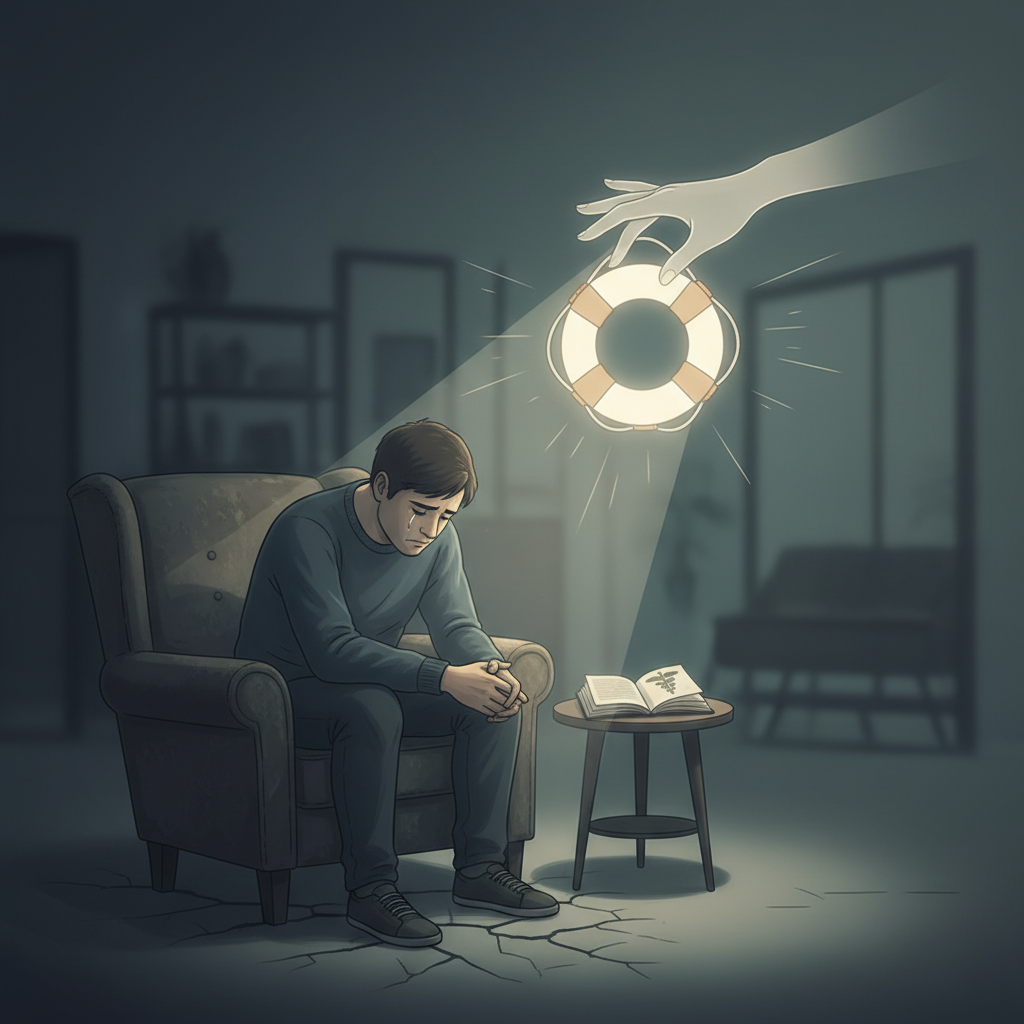
Why coping sometimes stops working
You probably already use coping skills. Maybe you take walks, listen to music, scroll your phone, work out, or talk to a trusted friend when life feels heavy. These strategies can be helpful and sometimes are enough to get you through a rough patch.
There are times, however, when coping is not enough. Instead of feeling better, you may notice that the same strategies bring less relief, or you feel worse once the distraction fades. That shift can be unsettling, and you might wonder if what you are going through is still “normal stress” or a sign that you need more support.
Understanding what coping skills can and cannot do helps you recognize when it is time to consider your next step toward professional care. If you want a broader overview of this decision process, you can also explore when to seek mental health care.
What coping skills actually do
Coping skills are short term tools that help you get through difficult moments. Deep breathing, journaling, exercise, or calling a friend can calm intense emotions, give you a sense of control, and create space between you and a stressful situation.
Research suggests that coping skills often target one part of your experience at a time, like thoughts, emotions, or behaviors, rather than the deeper beliefs or past experiences underneath them [1]. This is why you may feel better in the moment but notice that the same symptoms return when stress increases.
Healthy coping can be both proactive and reactive. Proactive coping helps you prepare for upcoming stress, while reactive coping helps you respond in the moment. Both are useful. The limitation appears when you only manage the surface of your distress without also addressing the underlying issues that keep it going.
When helpful coping turns unhealthy
Some coping strategies are clearly harmful, like heavy substance use or self harm. Others start out as healthy but gradually become unhealthy when they are used excessively or to avoid problems instead of confronting them.
An April 2025 review notes that even adaptive behaviors like exercise or occasional alcohol use can shift into unhealthy patterns such as gym addiction or substance abuse when they become compulsive or out of control [2]. In these cases, the coping strategy becomes part of the problem instead of the solution.
Maladaptive coping often works like an emotional band aid. It numbs or distracts you for a short time but does not address the injury underneath. Over time, your original distress can worsen, and the coping behavior may need to increase to deliver the same relief [3]. You might feel more chaos or confusion as the gap widens between what you show on the surface and what you feel inside.
Avoidance coping is a common example. This includes denying concerns, procrastinating on important tasks, or using substances or behavioral addictions to escape. Research links chronic avoidance coping with higher psychological distress and with conditions such as depression, PTSD, and anxiety disorders [4].
Recognizing when your strategies are masking rather than resolving issues is an important part of mental health self awareness. It also signals that you may need support beyond self help skills.
Warning signs that coping is not enough
You may not immediately recognize that your usual ways of handling stress are no longer working. Maladaptive strategies are designed to distract you from pain, so they are often hard to see clearly [3]. Paying attention to early indicators can help you respond sooner instead of waiting for a crisis.
Here are common signs you might notice when coping alone is no longer sufficient:
- Relief is brief or disappears
You use a familiar skill, such as walking, journaling, or deep breathing, but the relief lasts only minutes. Your mood quickly drops back to where it was, or you feel even more discouraged that “nothing works.” - You need more and more to feel okay
You find yourself exercising excessively, binge watching for hours, or increasing your use of substances just to feel numb. What used to help with one episode now barely touches the distress. - Your life is shrinking
You start avoiding people, activities, or places that once mattered to you because they feel too overwhelming. Over time, your world becomes smaller, and your anxiety or sadness seems to grow instead of shrink, even as you try to stay “safe” [5]. - Your functioning is impacted
Difficulty getting out of bed, concentrating at work, keeping up with responsibilities, or maintaining relationships suggests more than everyday stress. When basic tasks feel unmanageable, this is a meaningful mental health warning sign, which you can read more about in our resource on mental health warning signs. - Coping becomes the main focus of your day
You spend large portions of your time planning, using, or recovering from coping strategies. For example, long workouts dominate your schedule, or drinking to unwind leaves you less able to function the next day. - You feel stuck or hopeless
Despite your efforts, nothing seems to change the underlying situation or the way you feel about it. You may think “I have tried everything” or “I should be able to handle this” and feel ashamed that coping is not enough.
When several of these experiences are present, it often means you need more than self directed strategies. It may be time to consider signs you need mental health support and explore professional options.
Emotional distress versus everyday stress
Everyone experiences stress. You might face deadlines, relationship tensions, or financial worries and still function relatively well. Emotional distress is different. It involves more persistent, intense, or disruptive experiences that affect how you think, feel, and act day to day.
You can learn more in depth definitions in our guide to emotional distress explained, but it helps to look at some practical differences.
| Everyday stress | Emotional distress that may need support |
|---|---|
| Upset for a few hours or a day, but mood recovers | Low or anxious mood most days for weeks or longer |
| Sleep may be restless for a night or two | Ongoing insomnia or oversleeping that affects functioning |
| Appetite changes slightly during busy periods | Significant changes in appetite or weight without trying |
| You feel pressured but still productive | Tasks feel overwhelming and hard to complete |
| You can still enjoy some activities | Little or no interest in things you used to enjoy |
| Occasional worries that pass | Persistent worry, fear, or dread that is hard to control |
If you notice that your experiences look more like the second column, your coping skills might be overstretched. These patterns can also overlap with early signs of mental illness, which are easier to address when identified early.
Why your usual coping may suddenly stop working
It can feel alarming when strategies that used to help stop being effective. You might assume you are “getting worse” or “not trying hard enough.” In reality, the problem is often that the situation has changed, not that you are failing.
Mental Health America notes several reasons coping skills may lose their impact, including major life changes, evolving emotional needs, or new stressors that your old tools were not designed to handle [6]. You might also grow or change as a person, and techniques that once fit no longer match who you are now.
Thriveworks clinicians describe six common reasons coping does not work as well as it once did [7]:
- You have not practiced the skill consistently enough for it to become effective
- The tool does not match the type or intensity of what you feel
- You are using the skill to avoid emotions instead of to regulate them
- You are going through the motions without intention or presence
- Your life has changed, but your coping toolkit has not
- The strategy simply is not a good fit for you personally
Seeing these factors can be relieving. It suggests that the next step is not to force the same coping harder, but to adjust your approach, including considering professional help when patterns do not shift.
When the real problem needs to be solved
Sometimes anxiety or distress is not a sign that you are broken. It may be a signal that something in your life is genuinely harmful or unsustainable. In these cases, coping skills alone cannot resolve the issue because they do not change the situation causing the pain.
An example described by Therapy in a Nutshell involves a woman whose anxiety and depression did not improve with yoga, mindfulness, or medication. Her symptoms shifted when she left an abusive marriage, because the root cause was finally addressed rather than only managed [5].
Anxiety can function as a messenger. If you mainly try to silence it through distraction or numbing, the underlying problem remains. This can keep you trapped in a cycle where avoidance coping shrinks your life and actually increases anxiety over time [5].
In situations like ongoing abuse, toxic work environments, chronic invalidation, or major unmet needs, coping skills still matter, but they are not enough. You may need support to:
- Clarify the specific problems you face
- Evaluate your options and safety
- Set boundaries or plan changes
- Process the emotions connected to those changes
Problem focused coping, which centers on identifying and addressing the stressor itself, is often linked with better psychological outcomes in these contexts [4]. Therapy can help you move from only soothing feelings to also solving what can be changed.
How to tell if professional support could help
It is not always obvious where the line sits between “I am struggling but managing” and “I should talk to a professional.” You do not need to wait until you are in crisis to reach out. Early intervention often means faster and more sustainable improvement.
You might consider professional support if you notice one or more of the following:
- Your symptoms persist for several weeks or longer
- Your coping strategies provide little or no relief
- Your work, school, or relationships are affected
- People close to you express concern about how you are doing
- You feel overwhelmed, stuck, or hopeless about your situation
- You rely on substances, self harm, or other high risk behaviors to get through the day
If you are unsure whether what you are experiencing fits these patterns, reviewing resources about recognizing emotional struggles can offer additional clarity.
Remember that seeking support is not a sign that you have failed at coping. It is an indication that you are paying attention to your mental health and making an informed choice to get help that matches what you are facing.
What therapy can offer beyond coping skills
Many people assume therapy is just “learning more coping skills.” While you might learn new tools, effective treatment goes further. It can help you understand and address the deeper patterns that make certain situations or emotions so difficult to manage.
According to the CBT triangle framework, coping skills often target thoughts, feelings, or behaviors in isolation. Therapy can explore how these layers connect to core beliefs, past experiences, and current contexts, which is why symptoms may ease more fully than with self help alone [1].
In practice, working with a mental health professional may help you:
- Identify unhealthy coping patterns and the pain they are protecting
- Build psychological resilience so that stress affects you less over time
- Process unresolved grief, trauma, or relational wounds
- Develop problem solving strategies for real life challenges
- Find or strengthen supportive relationships
Research with high stress groups, such as military personnel, suggests that increasing psychological resilience can reduce reliance on negative coping and promote more adaptive strategies in the future [8]. Therapy can be one of the spaces where that resilience is built.
To learn more about what counseling actually involves, you can explore how therapy helps mental health.
Taking your next brave step
Recognizing that coping is not enough is a meaningful turning point. It means you are noticing the gap between how you are managing on the surface and how you feel inside. That awareness, while uncomfortable, is often the first step toward change.
Your next brave step does not have to be dramatic. It might look like:
- Honestly naming what you are feeling, even just to yourself
- Sharing your experience with a trusted person instead of hiding it
- Reading more about mental health myths so you are not held back by stigma
- Scheduling a screening or consultation with a mental health professional
- Exploring resources about when to seek mental health care to better understand your options
You do not have to wait until everything falls apart to ask for help. Paying attention to early signs, understanding emotional distress, and responding when coping starts to fall short are all ways you can care for your mental health with intention and courage.