
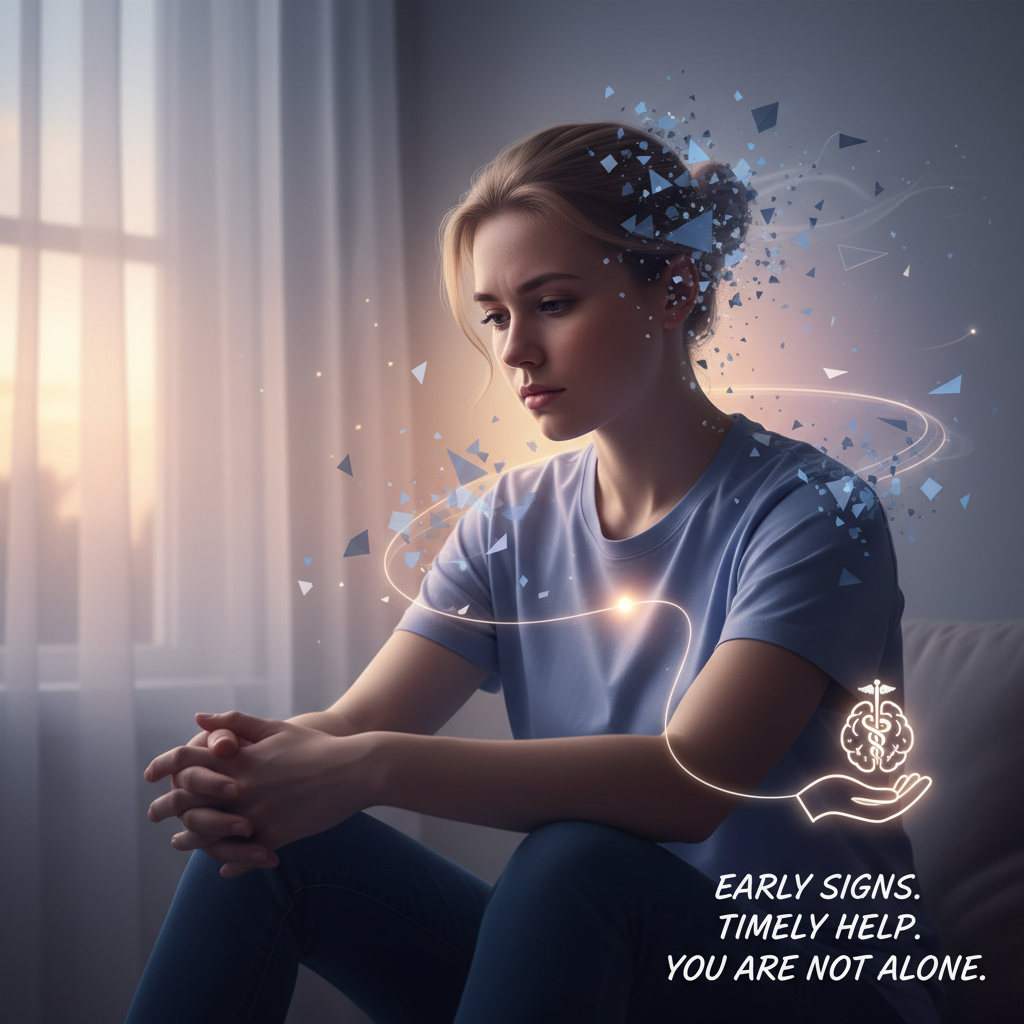
Recognizing the early signs of mental illness in someone you care about can feel overwhelming. You might notice small changes and wonder if you are overreacting or if something serious is happening. Understanding what to look for and when to seek help allows you to respond early, when support can make the biggest difference.
In this guide, you learn how to identify early signs of mental illness, how to distinguish normal stress from more serious concerns, and how to encourage your loved one to get professional care when it is needed.
Why early signs of mental illness matter
Mental health problems often begin earlier in life than many people realize. Around half of all mental illnesses start by age 14, and about three quarters start by age 24, which makes adolescence and young adulthood a critical time for early recognition and support [1].
Major conditions such as schizophrenia or bipolar disorder usually do not appear suddenly. Family members, friends, teachers, or the person themselves often notice subtle shifts in mood, thinking, or behavior before a full illness develops [1]. When you notice these early warning signs, prompt evaluation and treatment can:
- Reduce the impact on school, work, and relationships
- Lessen symptom severity
- Decrease the chance of hospitalization
- Improve long term prognosis and quality of life [1]
Understanding these patterns helps you see why paying attention to small but persistent changes is so important.
Normal stress vs potential mental illness
Everyone has difficult days, mood swings, and stressful periods. The challenge is telling the difference between a rough patch and the early signs of mental illness. You are not trying to diagnose your loved one. Your goal is to notice patterns that suggest it is time to reach out for support.
You can consider three key questions:
- Duration. How long have the changes been going on?
- Intensity. How severe are the changes compared to this person’s usual self?
- Impact. Are the changes interfering with daily life at school, work, or in relationships?
According to Mayo Clinic, early signs of mental illness involve changes in mood, thinking, or behavior that cause frequent stress and negatively affect functioning in important areas of life [2]. If your loved one seems different for weeks at a time, not just a few days, and it is clearly affecting how they live, it is appropriate to take your concerns seriously.
For more help understanding how emotional strain shows up in daily life, you can read about emotional distress explained and recognizing emotional struggles.
Common emotional and mood changes
Emotional shifts are often the first early signs of mental illness. These changes can appear gradually, or they can become noticeable after a stressful life event.
Frequent emotional warning signs include:
- Persistent sadness or emptiness that does not lift
- Irritability, agitation, or anger that feels out of character
- Anxiety, excessive worry, or a constant feeling of being on edge
- Loss of interest in activities that used to bring joy
- Feeling hopeless, helpless, or overly guilty
- Mood swings that are more intense or more frequent than usual
For depression in particular, early signs often include sadness that does not go away, irritability, apathy, low energy, and disrupted sleep or appetite [3]. Anxiety disorders can begin with restlessness, rapid heartbeat, and ongoing worry that is hard to control [4].
If you notice several of these changes at once, or you recognize them persisting for weeks, it may be time to learn more about mental health warning signs.
Changes in thinking and concentration
Mental illnesses do not only affect mood. They often change how a person thinks, focuses, and interprets the world around them. These cognitive changes may be subtle at first.
You might notice your loved one:
- Has trouble concentrating, making decisions, or remembering things
- Seems easily confused by tasks they used to handle well
- Expresses very negative thoughts about themselves or the future
- Becomes suspicious, fearful, or unusually mistrustful of others
- Talks about feeling “unreal” or disconnected from their surroundings
Cognitive changes are a recognized early indicator of depression, including difficulty concentrating, negative thinking, and harsh self criticism [3]. In some cases, people may develop distorted beliefs, delusions, disorganized speech, or hallucinations, which are clear warning signs of a possible psychotic disorder and require prompt evaluation [5].
If thinking changes are significant enough that your loved one struggles with school or work performance, or their comments about reality seem very unusual, it is important to encourage professional assessment.
Behavioral and social warning signs
Behavior often changes before someone can clearly name what they are feeling. As a family member or friend, you may notice their habits and routines shifting first.
Some behavioral early signs of mental illness include:
- Withdrawing from family and friends
- Avoiding social activities or hobbies they once enjoyed
- Neglecting responsibilities at school, work, or home
- Sleeping much more or much less than usual
- Significant changes in eating patterns or weight
- Increased use of alcohol or drugs to cope
- Sudden drop in performance or motivation
Mayo Clinic experts note that withdrawing from social interactions, avoiding activities, and neglecting day to day responsibilities are early behavioral signs of depression that can feed into a worsening cycle [3]. Similarly, avoiding activities you once enjoyed can signal the onset of anxiety or depression [4].
You do not need to label a diagnosis to pay attention. What matters is noticing that your loved one is living very differently from how they did before, especially if they seem to be losing interest in things that used to be important to them.
Physical symptoms that may signal distress
Mental illnesses often show up in the body. Unexplained physical problems are sometimes dismissed or treated in isolation, which can delay needed mental health care.
Common physical signs that may be linked to a developing mental health condition include:
- Frequent headaches
- Stomach pain or digestive issues without a clear medical cause
- Back pain or widespread aches
- Ongoing fatigue or lack of energy
- Changes in sleep patterns, such as insomnia or oversleeping
- Noticeable slowing of movement or speech
According to Mayo Clinic, mental illness symptoms can sometimes present primarily as physical problems, such as stomach pain, back pain, or headaches, particularly when no medical explanation is found [2]. For depression, disrupted sleep, fatigue, and slowed body movements can appear early as well [3].
If your loved one has seen medical providers and tests do not explain their symptoms, it can be helpful to raise the possibility of underlying stress, anxiety, or depression and encourage a mental health evaluation.
When changes are urgent
Some signs call for immediate attention rather than a wait and see approach. You should treat these as urgent, even if your loved one has not been diagnosed with a mental illness before.
Seek emergency help right away if you become aware of:
- Any talk about wanting to die, not wanting to be alive, or feeling like a burden
- Plans or attempts to harm themselves or others
- Hallucinations, such as hearing voices or seeing things that are not there
- Severe confusion, delirium, or inability to respond normally
- Sudden changes in behavior combined with fever, severe headache, recent head injury, or problems walking or speaking
Suicidal thoughts are common in some mental illnesses and typically do not improve without treatment. Mayo Clinic emphasizes the importance of identifying these thoughts early and seeking immediate help, since untreated mental illness often worsens over time and can lead to serious consequences [2].
Merck Manuals also notes that sudden personality or behavior changes, especially when not clearly linked to a life event, and symptoms like delusions, hallucinations, or extreme mood states require urgent medical assessment [5].
If there is immediate danger, call 911 or your local emergency number. You can also call or text 988 in the United States for crisis support, as recommended by NAMI [6].
How professionals identify early mental illness
You might worry that you are misreading the situation or that your concerns will not be taken seriously. It can help to understand how professionals approach early signs of mental illness and what happens during an evaluation.
There is no single test that confirms a mental health condition. Instead, clinicians rely on:
- A detailed personal and family history
- Questions about mood, behavior, thinking, and physical symptoms
- Mental status examinations that look at attention, memory, and perception
- Medical exams and tests when needed, such as blood work or brain imaging, to rule out other causes like medications, substance use, or medical conditions [5]
- Diagnostic criteria from the Diagnostic and Statistical Manual of Mental Disorders, which outline specific symptoms and time frames [6]
Experiencing several symptoms that seriously affect the ability to study, work, or relate to others is a clear signal that a professional evaluation is needed [1]. This does not guarantee a severe diagnosis. In many cases, early support can prevent progression into a more serious illness [1].
If you are unsure if the situation rises to that level, reviewing signs you need mental health support and when to seek mental health care can help you think through next steps.
When to seek professional support for your loved one
You do not need to wait until symptoms are severe to reach out for help. Early intervention can minimize or delay the onset of more serious symptoms and reduce the likelihood of hospitalization [1].
It is reasonable to encourage your loved one to see a mental health professional if you notice:
- Symptoms lasting more than two weeks, especially persistent sadness, anxiety, or loss of interest
- Clear impact on school, work, or family responsibilities
- Increasing withdrawal from social contact
- Escalating use of substances to cope
- Repeated physical complaints without a medical cause
- Several early signs appearing together and getting worse over time
If they agree, you can offer to help with practical steps, such as locating providers, arranging appointments, or going along for support. You can also explore resources that explain how therapy helps mental health so they know what to expect.
In some cases, you may feel that your loved one is struggling but still functioning “well enough.” Even then, seeking care can be beneficial. Mental health conditions rarely improve on their own, and untreated symptoms often become harder to manage later [2].
Supporting your loved one through the process
Approaching someone about your concerns requires sensitivity. You may worry about saying the wrong thing or causing them to pull away. Keeping your focus on care, not criticism, can make a difference.
You can:
- Choose a calm, private time to talk
- Use “I” statements, such as “I have noticed you seem more withdrawn lately, and I am concerned about you”
- Give specific examples of what you are seeing instead of general labels
- Listen more than you speak, and avoid arguing about whether they are “really” ill
- Normalize seeking help by comparing it to going to a doctor for physical symptoms
- Offer choices and collaboration rather than demands
You might also share that many mental health conditions are common, and that challenges with mood or anxiety are not a personal failure. In fact, anxiety and depressive disorders affect more than 40 million adults in the United States every year, and yet only a fraction receive treatment [4]. Understanding mental health myths can help you both move past stigma and focus on practical support.
If your loved one is not ready for professional care, you can still encourage healthy routines, stay connected, and keep the conversation open. At the same time, it is important to recognize when coping is not enough and to reach out for guidance if their symptoms worsen.
Taking care of yourself while you help
Supporting someone through early signs of mental illness can be emotionally demanding. You may feel anxious, frustrated, or helpless at times. Paying attention to your own wellbeing allows you to stay present and compassionate for the long term.
You can:
- Seek your own counseling or support group
- Learn more about mental health self awareness so you recognize your limits
- Set boundaries around what you can and cannot do
- Reach out to trusted friends or family to avoid feeling isolated
- Access educational resources such as mental health warning signs to feel more confident in what you are noticing
If you find yourself overwhelmed, remember that you are not alone. Organizations like NAMI offer information and a HelpLine for families and individuals. NAMI notes that knowing the warning signs is a vital first step, and that immediate support is available through the NAMI HelpLine and the 988 crisis line when needed [6].
By learning to recognize early signs of mental illness and understanding when professional support is needed, you give your loved one a powerful gift: the chance to get help sooner, rather than later. Early attention, compassionate communication, and timely care can change the course of a mental health condition and support a more hopeful path forward.