
Why Emotional Wellness, Self-Compassion, and Healthy Relationships Matter
For many people, emotional needs have been framed as weaknesses.
Too sensitive.
Too needy.
Too emotional.
Too much.
But from both a clinical mental-health perspective and a coaching lens, this narrative is not only inaccurate — it’s harmful.
Your emotional needs are not excessive.
They are human, neurological, and essential.
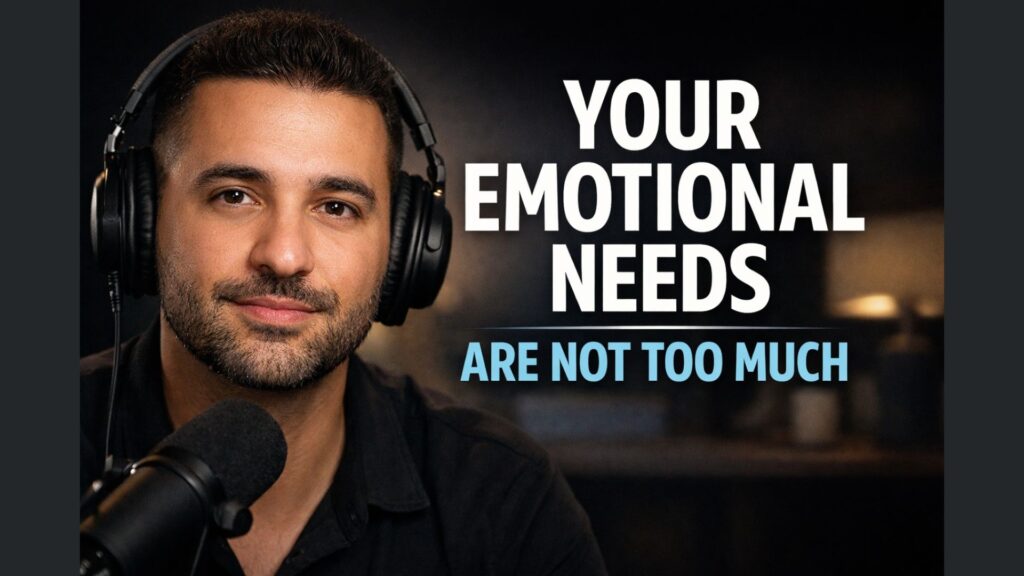
Emotional Needs Are Biological — Not Character Flaws
Psychiatrically speaking, emotional needs are rooted in the nervous system. Humans are wired for connection, safety, validation, and belonging. When these needs go unmet, the brain doesn’t simply “move on.” It adapts by becoming hyper-alert, anxious, or emotionally guarded.
This is not weakness.
It is survival.
Wanting reassurance, closeness, understanding, or emotional safety does not make you dependent — it makes you aware of your internal signals.
Mental wellness begins when we stop shaming ourselves for having needs and start understanding what those needs are communicating.
Relationship Anxiety Is About Wounds, Not Weakness
Relationship anxiety is often misunderstood as insecurity or jealousy. In reality, it frequently stems from past emotional wounds — inconsistent caregiving, emotional neglect, abandonment, or relational trauma.
Clinically, this anxiety activates the brain’s threat response system, keeping the body in a state of vigilance even when danger is no longer present.
From a coaching perspective, awareness creates relief.
When you understand your patterns, you stop blaming yourself and start building emotional safety from the inside out. Healing relationship anxiety isn’t about forcing calm — it’s about re-teaching the nervous system that connection can be safe.
Women, Confidence, and Emotional Empowerment
Women’s emotional expression has historically been minimized or criticized, while emotional suppression has been mislabeled as strength.
True confidence is not emotional numbness.
It is emotional regulation, self-trust, and self-advocacy.
Research consistently shows that emotional validation reduces anxiety, depression, and trauma-related symptoms. When women are supported emotionally, they become stronger leaders, caregivers, partners, and decision-makers.
Mental wellness is empowerment — not indulgence.
Heartbreak Is Grief — and It Deserves Care
Heartbreak is not something to “get over.”
Clinically, emotional loss is processed in the brain similarly to physical pain. This is why heartbreak affects sleep, appetite, focus, and physical health.
Rushing the healing process often leads to unresolved grief and emotional avoidance. Healing requires patience, compassion, and support.
You don’t heal by pretending you’re fine.
You heal by allowing yourself to be human.
Self-Compassion Is Not Selfish
Self-compassion is often misunderstood as weakness or self-indulgence. In reality, it is one of the most effective tools for emotional resilience.
Psychiatric research shows that self-compassion lowers cortisol, improves emotional regulation, and reduces burnout. Coaching psychology reinforces that you cannot sustainably care for others while emotionally depleted.
Self-compassion sounds like:
- “I’m allowed to rest.”
- “I’m allowed to need help.”
- “I’m allowed to feel this without judgment.”
Caring for yourself strengthens your ability to care for others.
Love Without Pressure
Love is not performance.
It is not perfection.
It is not comparison.
Healthy love is presence, safety, and emotional care — whether you are partnered or single.
Your worth is not defined by relationship status, milestones, or external validation. Emotional wellness begins when love is rooted in self-respect and nervous-system safety, not pressure or expectation.
Emotional Wellness Is a Practice — Not a Destination
Healing is not linear. Emotional wellness is not about eliminating emotion; it’s about learning how to understand, regulate, and honor it.
Support matters. Education matters. Compassion matters.
If this message resonates, it’s because you are listening to your emotional world — and that awareness is strength.
👉 Explore therapy, coaching, and mental-health support at
GlobalImpactWellness.com